

July 1st, 2020 · Updated 25 October 2026
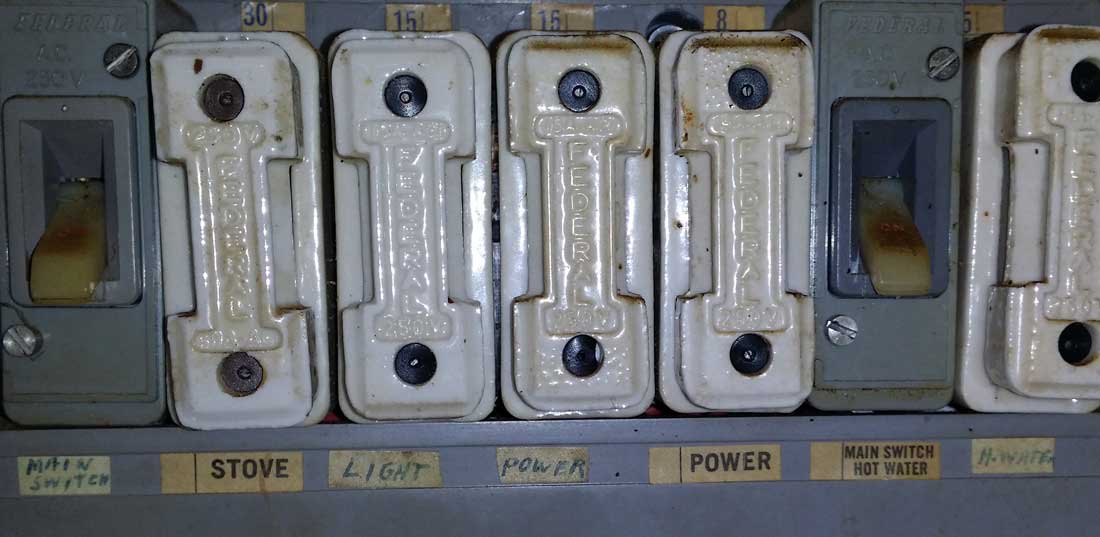
Ceramic fuses are still found in older Sunshine Coast homes. You might not think about them until the lights go out or an appliance stops working, but the condition of the switchboard and the protection behind it are worth understanding before a fault interrupts your day.
An old fuse board doesn't automatically mean the whole house needs rewiring. It does deserve a proper assessment, particularly if fuses keep blowing, fittings are damaged or you're planning electrical additions.
What does a ceramic fuse do?
A rewireable ceramic fuse uses a short length of fuse wire that melts when excessive current flows. Its job is to protect circuit wiring against overload and short circuit conditions. It does not provide the earth leakage protection of a safety switch. Some older installations have safety switches added alongside fuses, so the presence of ceramic fuses alone does not tell you which circuits have that protection.
Why Dr Watt recommends assessing old fuse boards
The wrong fuse wire. If someone fits wire with too high a current rating, the circuit may no longer have suitable overload protection. Cable damage and overheating can follow. A fuse that keeps blowing needs investigation, not a heavier piece of wire.
Damaged ceramic parts or exposed contacts. Cracked fuse carriers, damaged bases or missing parts can create a risk of contact with live components. Keep clear of damaged switchboard equipment and arrange professional attention.
Deteriorated connections. Loose or deteriorated connections at terminals or between components can cause local heating. Replacing fuse wire does not repair a damaged base or address a poor connection.
Limited circuit protection. A board may have no safety switches, or several circuits sharing one device. Dr Watt assesses the existing arrangement and explains suitable protection options for the work proposed.
Repeated faults. A blown fuse is a symptom, not a diagnosis. An appliance, damaged wiring, overload or another fault may be responsible, and repeatedly restoring power without identifying the cause can leave the problem unresolved.
What if ceramic fuses have been replaced with plug-in breakers?
A plug-in circuit breaker may remove the need to replace fuse wire, but that change alone does not establish the condition of the fuse base, terminals, wiring or the rest of the switchboard. A standard circuit breaker is also different from a safety switch. Unless the device includes residual current protection, or a separate safety switch protects the circuit, it does not provide that form of personal protection. We assess the actual equipment and installation, and fitting a plug-in breaker does not automatically make an old switchboard fully upgraded.
What should you do if a fuse keeps blowing?
Stop using any equipment suspected of causing the problem and arrange fault finding. Do not fit heavier fuse wire, improvise a replacement, repeatedly restore power or open switchboard covers.
If you see scorching, damaged parts or sparking, or notice unusual heat or a burning smell, stay clear and seek urgent assistance. For smoke, fire or immediate danger, move to safety and call 000. For shocks or tingles from taps, appliances or metal fittings, stay clear, do not touch the switchboard and call Energex immediately on 13 19 62.
Does an old fuse board mean a full rewire?
No. Switchboard condition and wiring condition need to be assessed separately, and a home can contain wiring installed or altered at different times. Some properties need improved circuit protection or repairs to particular circuits, and others need more extensive wiring replacement. Inspection and appropriate testing help establish what work is needed. A newer-looking switchboard is not proof that all the wiring has been replaced, either. See our rewiring page for more.
What a modern upgrade can offer
Where a switchboard upgrade is appropriate, Dr Watt plans a tidy arrangement with clearly labelled circuits and room for future additions where practical. We use individual RCBOs (combined circuit breakers and safety switches) to give each final sub-circuit its own protection, which also helps contain a fault to the affected circuit rather than interrupting several circuits sharing a safety switch. An upgrade does not automatically require a full house rewire. Read about safety switches too.
Still using ceramic fuses, or unsure what protection your switchboard provides?
Send Lior a photo taken from a safe position without removing covers. Dr Watt can discuss the next step and arrange an assessment of your switchboard and relevant wiring. Call 0410 699 352 or request a switchboard assessment.
QLD Electrical Contractor Licence 82601 · 30+ years' electrical experience · Based in Mooloolah Valley