
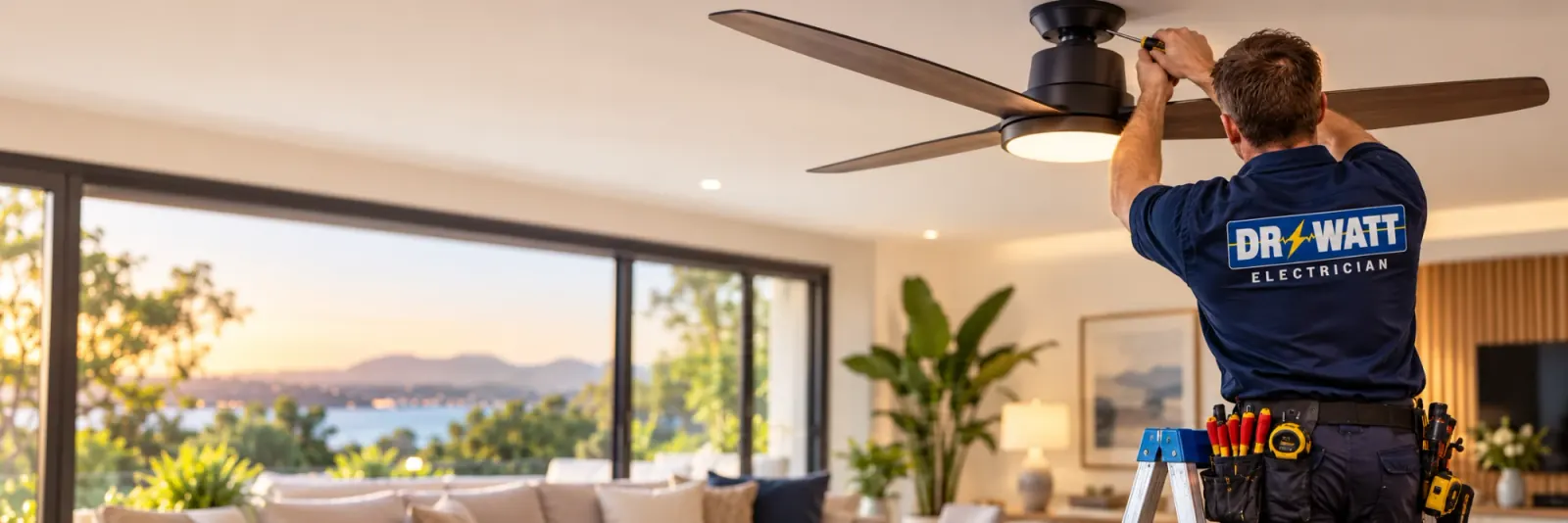
A ceiling fan should do more than look good: it needs to move enough air to make the space comfortable. Dr Watt installs new fans and replaces existing fans in homes, businesses, patios and alfresco areas across the Sunshine Coast. Lior checks the mounting, wiring and controls, and helps you assess whether your chosen fan suits the room and location before installation. Send the product details before buying if you'd like us to check the installation requirements.
QLD Electrical Contractor Licence 82601 · 30+ years' electrical experience · Servicing the Sunshine Coast
What we install
- Replacement fans where the existing wiring and support are suitable, with any repairs or changes discussed before proceeding
- New fan points, with suitable wiring, switching and circuit protection assessed for the installation
- Indoor and suitable outdoor fans for bedrooms, living areas, patios and alfresco spaces
- DC fans with compatible remote or wall controls, depending on the model
- Fans with integrated lights, with controls and switching matched to the fan's design
- Compatible wall control upgrades where supported by the selected fan
- Fans for high or raked ceilings, using approved mounting accessories and suitable access equipment where needed
Choosing a fan: check airflow first
Don't choose on appearance or blade size alone. Check the manufacturer's air movement figure, usually listed in cubic metres per hour (m³/h), and whether that figure is the maximum at high speed.
As a general buying guide, Dr Watt recommends looking for at least 11,000 m³/h of advertised maximum airflow. We generally suggest avoiding models below this figure, as they often don't deliver the air movement our clients want through a Sunshine Coast summer.
This is a starting point for selection, not a regulatory minimum or a guarantee for every room. Room size, ceiling height, blade design, placement and how you like to use the fan all matter. For bedrooms, also look for a gentle low speed setting and comfortable noise levels, because you won't necessarily run the fan on high while sleeping. A larger blade span does not automatically mean stronger airflow, so compare the specifications of the actual models you're considering, including performance at different speeds where available.
Indoor/outdoor suitability and other buying considerations
Indoor and outdoor models. We generally recommend considering fans approved for both indoor and outdoor use. Check exactly what "outdoor" means for that model: many are suitable only for sheltered, covered areas and have specific clearance or exposure restrictions.
Coastal suitability and blade materials. For coastal homes, we generally favour suitable ABS or polymer blades and fittings designed for the conditions. Confirm the manufacturer's coastal-use conditions, cleaning requirements and warranty exclusions. Outdoor approval alone does not mean a fan can be exposed to rain or resist every coastal environment.
DC motors. Dr Watt generally prefers DC fans for their energy efficiency and range of speed settings. Noise, controls, airflow and reliability still depend on the particular model, so check whether the fan uses a remote, a compatible wall controller or both.
Ceiling height and slope. The fan must suit the available height, slope and required clearances. A low-profile model may suit some low ceilings, and high or sloping ceilings may need approved extension rods or angle accessories. We check the manufacturer's requirements before confirming the installation.
Lights and controls. If the fan includes a light, consider brightness, colour temperature, dimming and how you want to control it. Separate wall switching is not available with every fan and may require additional wiring, so check the model before buying.
How the installation works
- Check the location and support. We assess access, clearances and the mounting structure. Where additional support is needed, we explain the work required. An existing light point does not automatically provide suitable support for a fan.
- Check wiring and controls. For a replacement, we assess the existing wiring, circuit protection and controls for the new model. For a new location, we plan a suitable cable route and discuss any switching or circuit work needed.
- Mount and check operation. We install the fan using the manufacturer's instructions, set up the agreed controls and check operation across its available speeds. We investigate abnormal movement or noise identified during installation and explain any further action needed.
- Test and hand over. We test the electrical work, provide the relevant electrical safety certification and explain the controls. We tidy the work area and confirm any removal or disposal included in the quote.
What affects installation costs
- whether the job is a suitable replacement or a new fan point needing wiring
- roof access, ceiling height, wall construction and the cable route available
- additional mounting support, approved rods or angle accessories
- the fan model, controls and any switching changes required
- outdoor exposure, access equipment and any circuit protection upgrades
- the number of fans and whether work can be combined efficiently in one visit
- any removal, disposal, patching or finishing included in the scope
We provide a written quote for the agreed installation. Installing several fans together may reduce repeat travel and setup, but the price depends on the work at each location.
Planning fans and lighting together
If you're adding fans and lighting, plan the positions and switching together. Light positions around rotating blades need care to avoid unwanted shadow or flicker effects. Combining the work can also make better use of roof access and reduce separate visits where practical. See our lighting installation services and, if you're renovating, our renovation electrical services.
Frequently asked questions
Can you install a fan I have already bought?
Yes. Send the model details, installation instructions if available and a photo of the proposed location. We check suitability, support, controls and access. For future purchases, we recommend checking airflow and location approval before buying.
What airflow should I look for?
Dr Watt generally recommends at least 11,000 m³/h advertised maximum airflow as a starting point. We usually advise against lower airflow models for clients wanting a strong cooling breeze. The final choice should also suit the room, mounting height and your preferred low speed operation.
Should I choose an indoor/outdoor fan?
We generally recommend considering a model approved for indoor and outdoor use, with suitable materials for the location. Confirm whether the outdoor approval is limited to covered, sheltered areas and check the manufacturer's coastal conditions. A fan must be approved for its actual installation environment.
Can a fan replace an existing ceiling light?
Often, but it needs assessment first. The existing location must have suitable support and clearances, and the wiring and controls must suit the fan. If you still need a light, consider a fan with an integrated light or separate lighting in the room.
Do I need an electrician to install a ceiling fan?
The electrical connection and associated wiring must be carried out by a licensed electrician. Dr Watt handles the agreed mounting, wiring, controls and electrical testing as part of the installation.
Found a fan you like? Check the airflow before you buy. Send Lior the product link, your suburb, a photo of the installation location and whether it's a replacement or a new fan point. Include the ceiling height and slope if known so we can discuss the work and provide a quote.